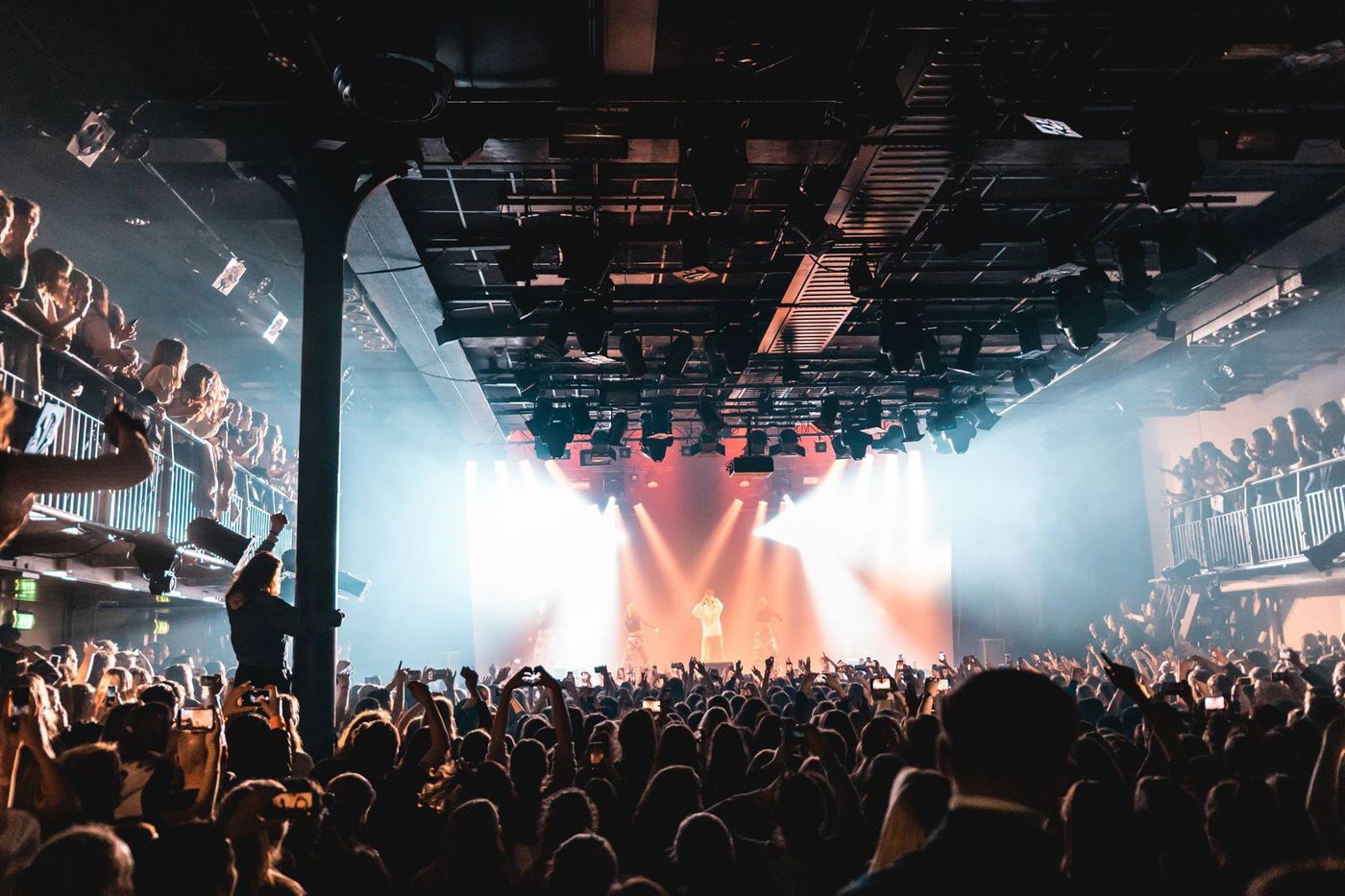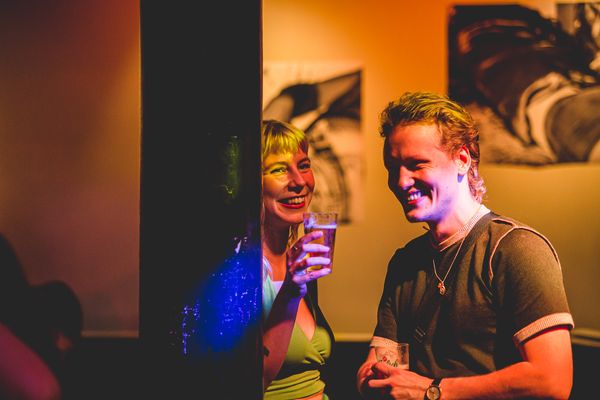
TERUGBLIK: ARTY PARTY 2023
Blik samen met ons terug op onze seizoensopener: het multidisciplinaire kunstfestival Arty Party

Step into the strip club of the future. Striptopia is a stripper-owned strip club built around autonomy. It is a cultural intervention, a design project, and a statement about how sexy entertainment could function if it were shaped by the workers themselves. Founded by Maggie Saunders, Striptopia grew out of years spent inside strip-club culture — not as an outsider looking in, but as someone who understood its rhythms, its beauty and its contradictions from the inside out.
Since its beginnings in 2019 as a graduation project from Design Academy Eindhoven, Striptopia has evolved into a stigma-breaking phenomenon, staging pop-ups across the Netherlands — from festival grounds like Down The Rabbit Hole to queer clubs such as Tilla Tec, and pop venues including Melkweg. But as Striptopia continues to grow, a new challenge has emerged. Amid a broader backlash from Meta — which has recently taken down several queer accounts such as Club Church — the fight is no longer only about visibility, but about not being erased altogether.
Ahead of their next event on Friday 30 January, Melkweg sat down with founder Maggie Saunders to talk about autonomy, designing for strip culture, and the future of sex-positive spaces.
In conversation with Maggie Saunders
Words by Davy de Lepper
Striptopia was born out of years of immersion in strip-club culture. Saunders worked in and visited more than fifty clubs around the world, and realised she was completely obsessed with its culture: “I had seen so many beautiful moments scattered across those venues,” she tells. “But I also saw everything that felt outdated and exclusionary. I had never actually stepped into a strip club or event that I truly resonated with.” Until this day, the culture that surrounds some clubs can be deeply toxic. Racism in hiring. Body shaming. The exclusion of women as customers. Staff taking a significant share of dancers’ income. An ecosystem largely built by men, with little care for the workers sustaining it. “So my motivation for Striptopia was simple,” Saunders says. “I wanted to create the strip club I had never found. A space built with intention, inclusion, and genuine respect. A space where sex work could be seen through a beautiful, destigmatised lens.”
“It became clear to me that the kind of strip club I imagined simply wasn’t out there. The only option was to create my own strip-topia.”
That spark was put into work during Saunders’ final year at Design Academy Eindhoven. While others framed social design around public space, sustainability or policy, Saunders found herself returning again and again to strip clubs — not as taboo environments, but as complex cultural systems. Spaces shaped by performance, intimacy, humour and vulnerability, yet burdened by stigma and outdated frameworks. “I realised just how deeply I loved these spaces,” she says, “and how misunderstood and undervalued they were.”
Crucially, Saunders’ analysis didn’t locate the problem in the dancers or the audience. Instead, it zoomed out. “The issue wasn’t sex work,” she explains. “It was the structures strip clubs were still operating under. They weren’t designed for women, they weren’t designed for queer people, they weren’t designed for couples or open-minded audiences — and they definitely weren’t designed with sex workers’ autonomy in mind.”
“I understood not just that a strip club could be different, but that it absolutely had to be.”
Around 2017 and 2018, that redesign began to feel not only possible, but necessary. Within stripper communities, the sex worker rights movement was gaining momentum. Dancers were speaking openly about workers’ rights, racism, body-shaming and safety. Conversations surfaced around house fees, tip-outs, and the power dynamics that kept dancers economically dependent on management. At the same time, London-based stripper collectives such as ELSC began organising their own pop-up clubs. For Saunders, it was a turning point. “It was the first time I’d seen dancers build something entirely on their own terms,” she says. She reached out to collaborate, to learn how performers were reimagining their environments, and how design could support autonomy rather than restrict it.
These exchanges became foundational for Striptopia. If the project were to exist at all, inclusivity could not be cosmetic. It had to be structural. “All bodies, all genders, all ethnicities, all forms of queerness — not as exceptions, but as the norm,” Saunders explains. Inclusivity wasn’t a marketing layer; it was the antidote to everything she had seen go wrong. Striptopia emerged as a pop-up strip club by necessity as much as design choice. Mobility is intrinsic to strip-club culture, and the pop-up format allows Striptopia to remain flexible, responsive and self-determined. Each iteration is shaped by the venue, the performers and the audience, while remaining anchored in the same core values.
“Our goal is to encourage people to interact with sex workers, helping to break stigma and see the experience as both fun and positive.”
Perhaps the most radical aspect of Striptopia is also the most straightforward: Striptopia does not profit from performer earnings: all income goes directly to the performers. In traditional strip clubs, dancers are often required to tip out multiple staff members, pay high house fees, or give up a percentage of their income. These practices are widely normalised, yet they place financial risk squarely on the dancers while shielding management from precarity. “At Striptopia, all tips, all stage money, all direct support from the audience belongs entirely to the performers,” Saunders says. “It sounds like such a basic right, but in many strip clubs this simply isn’t the case.”
This financial model is supported by Striptopia’s custom-built web app, which places tipping at the centre of the experience. Audience members can select a performer and tip them directly through their phone. Those tips then appear as animated coins projected onto the screen, allowing the entire room to share in the momentum and celebration. The app doesn’t replace intimacy — it amplifies it. It turns appreciation into a collective, visible act while maintaining full transparency. Technology, here, is not a novelty, but a tool for redistribution. By giving performers full ownership of their income, Striptopia actively dismantles the dependency that defines much of the industry. “They’re rewarded directly for their artistry, presence, and labour. Exactly as they should be,” Saunders says.
“No other kind of performer interacts with an audience the way a sex worker can. That relational skill is part of the art form.”
Artistically, Striptopia resists algorithmic logic. Followers, branding and polished social media feeds are irrelevant. What matters is lived-in talent. “I don’t care how many followers someone has,” Saunders says. “What I want to see is raw, embodied skill — the kind that comes from people who truly know the work.” Sex workers, she argues, possess a relational intelligence that is often overlooked. “No other kind of performer interacts with an audience the way a sex worker can. That relational skill is part of the art form.”
Performers are given freedom to conceptualise their acts, supported by clear creative direction rather than control. Saunders sees her role not as a manager, but as a facilitator — holding space for autonomy while ensuring cohesion. For dancer Miki, that structure offers something rare. “Striptopia gives me consistency in an industry full of uncertainty,” they say. “I get to play with my sexuality and art in new ways every show, while knowing there will be a next one. I’ve also found real community here.”
“Inclusivity and autonomy aren’t trends. They’re ethical standards.”
Striptopia is not neutral, nor does it claim to be. It exists as a statement — against discriminatory hiring practices, outdated power structures, and profit-driven models that prioritise management over workers. “I want performers to be treated as artists and workers with rights,” Saunders says. “Inclusivity and autonomy aren’t trends. They’re ethical standards.” The ambition stretches beyond Striptopia itself. If the project can contribute to a broader shift towards dancer-owned models, equitable treatment and curiosity about how strip clubs might evolve, its impact will reach far beyond its pop-up walls. ”I hope people leave a Striptopia show feeling like they’ve had a genuinely great experience with sex workers — not as something separate or taboo, but as a shared, joyful moment they’re excited to recommend to others. Most people arrive with some preconceived idea of what adult entertainment is, and it’s incredible to watch those expectations melt away.”
That ambition becomes increasingly urgent in the current digital landscape. As queer and sex-worker communities rely more heavily on online platforms for visibility and income, they face escalating censorship. Meta’s recent removal of LGBTQIA+ and abortion-related accounts — often without explanation — underscores how fragile digital presence has become.
“Censorship doesn’t just remove content: it erases lives, livelihoods, and culture.”
For projects like Striptopia, this isn’t abstract. Visibility is survival. When platforms algorithmically suppress queer bodies, sexual expression and sex-worker voices under the guise of ‘community guidelines’, they reinforce the very stigma Striptopia exists to dismantle. Striptopia’s existence — physical, embodied, unapologetic — pushes back against that erasure. It insists that sex work is culture. That queer desire is not obscene. That autonomy cannot be moderated out of existence. In a time when digital spaces grow increasingly hostile, Striptopia offers something radical: a room. A stage. A collective experience where pleasure, respect and agency are not just permitted, but centred. Existence itself becomes an act of resistance — and the dancefloor, a site of refusal.
Traditional strip clubs rarely take the time to set expectations or educate audiences. Striptopia does both, and the result is palpable. Ask Saunders what truly sets Striptopia apart, and she doesn’t point first to design or technology. She points to the audience. “People arrive curious — sometimes even with low expectations,” she says. “And then there’s this collective moment when they realise: this is something completely different.” The room feels loud, warm and supportive. Cheers erupt not just for bodies, but for performance, craft and connection. Discovery radiates outward, and performers respond in kind.
In a moment where queer and sex-worker visibility is increasingly under pressure — online and offline — showing up matters. On Friday 30 January, Striptopia brings their stigma-breaking-experience to Melkweg. An invitation to step into a space where strip culture is reclaimed on its own terms. Where performers are centred, audiences are accountable, and desire is treated not as something to be controlled, but as something to be celebrated. Take part in a night where existence itself becomes an act of resistance!
Blik samen met ons terug op onze seizoensopener: het multidisciplinaire kunstfestival Arty Party
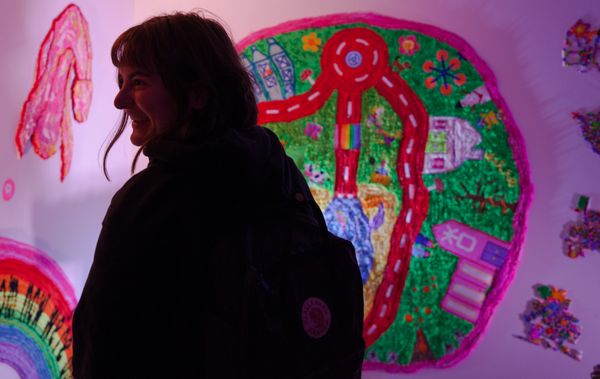
Blik samen met ons terug op het multidisciplinaire afstudeerfestival
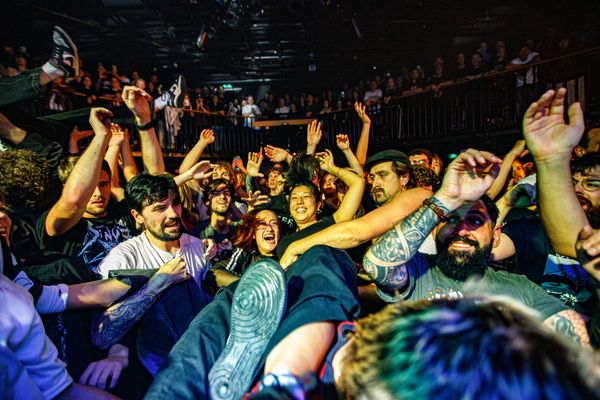
We blikken terug op een bomvol jaar: dit was Melkweg 2025!